


Founded in 2017,BemoreOptics is a wholesale eyewear distribution company that specializes in providing a wide range of eyewear products. At BemoreOptics, we offer custom branding services,allowing clients to personalize their eyewear with their own brand logos and identity, enhancing their brand recognition.
Why Choose Us
Design Team
Our talented designers are always in sync with the latest trends, concentrating on developing distinctive eyewear styles and customized solutions that fulfill the unique needs of our clients.
Certifications
BemoreOptics is approved by CE, FDA, and BSCI. It has also passed a Walmart audit.
Design And Prototype Production
Based on the demands of the client, designers produce hand-drawn sketches or 3D models that depict the structure and look of the eyewear. Adjust the design to meet ergonomic, aesthetic, and functional requirements.
Brand Personalization
Add brand elements, such as logo engraving, printing, or heat transfer, according to customer requests. This is ideal for Bulk Order Sunglasses and Custom Sunglasses with logos. Custom packaging design, including eyewear cases, cleaning cloths, etc.


Product Categories
Latest Products


Advantages of Reading Glasses
They can improve your vision when reading or doing other close-up activities.
If you find yourself squinting or struggling to see while reading or performing other close-up tasks, it may be time to invest in a pair of reading glasses.
Reading glasses work by focusing on the object you're looking at, which can help to reduce eye strain and improve your overall vision. When reading, writing, or working on other close-up tasks, you can benefit from better vision and clarity with the right pair of reading glasses.
They can protect your eyes from strain and fatigue.
While there are numerous causes of vision problems, reading glasses can help to reduce the strain and fatigue associated with reading. They make it easier for the eye to focus by magnifying the text. This can help to alleviate eye strain and fatigue, as well as headaches and other eye strain symptoms. They can also help people with presbyopia, a condition that causes a loss of near vision. With so many advantages, it's no surprise that they are a popular choice for people looking to improve their vision.
They have the potential to improve your overall vision.
It is not uncommon for people to require reading glasses as they get older. As we age, our eyes' lenses become less flexible, making it difficult to focus on close objects. Reading glasses can help improve vision by reducing eye strain and allowing the eye muscles to relax. They can also help with depth perception and headache prevention. While reading glasses cannot cure poor vision, they can significantly improve overall vision.
They are inexpensive and easy to locate.
Whether you want reading glasses that are fashionable or functional, you can find them at a reasonable price. They are widely available in most drugstores and supermarkets. While reading glasses will not cure presbyopia, they will allow sufferers to enjoy reading, computer use, and other close-up tasks again.
Furthermore, reading glasses can be easily removed when not needed, making them a convenient and cost- effective way to improve vision.
They are available in a variety of styles to meet your requirements.
Reading glasses are available in a variety of styles and designs, so there is bound to be a pair that meets your requirements. They have clear lenses. Reading glasses with bifocal or progressive lenses, which allow you to see both close and far, are also available.
Reading glasses, in whatever style you prefer, can help you rediscover your love of books, magazines, and newspapers.
They do not require a prescription to be purchased.
Over-the-counter reading glasses are a popular and convenient option for many people with minor vision impairments. Unlike prescription glasses, reading glasses do not require an eye exam or a fitting by an optician. With a little trial and error, anyone can find the perfect pair of them for their needs.
What Is Reading Glasses
Reading glasses provide a separate set of glasses for focusing on close by objects.

Tips for Choosing the Right Reading Glasses
Decide between custom and ready-made glasses.
Ready-made glasses can be purchased at a drugstore or pharmacy. They are one-size-fits-all and less expensive than custom glasses. These off-the-shelf readers typically don't come in multi-focal or progressive options.
Custom glasses. If you have a different prescription in each eye, myopia or astigmatism, ready-made glasses may not meet your needs. With custom glasses, an optician will make lenses based on your prescription, including the distance between your pupils. Your pupils must be aligned to the optical center of the lenses to get your best vision correction.
Select the right lens design.
Reading glass lenses come in a few categories; your choice depends on the vision correction you need.
Single vision lenses are designed to correct distance vision. They can be set to any focus, including near or intermediate vision.
Bi-focal lenses have a correction for reading on the bottom half of the lens and another for distance on the top.
Tri-focal lenses have three sections: distance vision, intermediate vision and near vision.
Progressive lenses have a smooth transition between distance and near focal areas without visible dividing lines. They can be more effective in correcting intermediate vision than bi- or tri-focals.
Your ophthalmologist should help guide you to the best lens design for your vision.
Choose your lens shape and size based on your prescription.
Lenses come in a wide variety of shapes and sizes. Smaller, more narrow lenses may work well for weaker prescriptions. But for stronger prescriptions or multi-focal lenses, larger lens shapes are a better option to allow enough room for the entire prescription. If the lens is too small, you may experience distortion or a prism effect.
Metal frames are more durable than plastic.
Plastic frames come in a large range of colors, styles and prices. Metal, titanium or alloy frames stand up better to wear-and-tear. Titanium is the lightest and most flexible metal frame material. When choosing frames, make sure they fit your face, nasal bridge and ears comfortably.
Polycarbonate and Trivex lenses are light and impact-resistant.
If you spend a lot of time outdoors or want lenses that are resistant to breaking, polycarbonate is a safe, lightweight choice. Trivex is another impact-resistant lens material that is lighter weight and may be less distorting than polycarbonate. If you have a stronger prescription, high-index plastic lenses are a thinner, lightweight option.
Protective coatings may make your glasses last longer.
Anti-scratch coatings are a good investment to improve the durability of your glasses. Most plastic lenses (including polycarbonate and Trivex) scratch easily.
Anti-reflective coatings reduce glare and distracting reflections on the surface of your glasses. If you are very nearsighted and require high-index lenses, which are more likely to have glare problems, this coating is helpful.
Photochromic lenses (or transitional lenses) protect your eyes from UV light. They darken automatically in sunlight, which is convenient if you are light-sensitive or plan to use the glasses outdoors. They are not recommended for use in cars.

How Do Reading Glasses Work?
As we age, our most comfortable reading distance gets farther and farther away from where it was in younger years. The natural lenses inside our eyes get stiffer with time, making it harder to focus on anything up close.
Reading glasses pull your comfortable focus point closer to you. That is, they help you see closer in than you naturally can. The stronger your reading glasses, the closer they will help you see.
Do I Need Reading Glasses?
Effects of Aging on Your Eyes
As you age, the lenses in your eyes harden and become less flexible, making it more difficult to focus on nearby objects. This naturally occurring condition is called presbyopia, and it generally starts to affect your near vision in your early to mid-40s. Many people with presbyopia turn to reading glasses to help them see clearly.
Signs You May Need Reading Glasses
Presbyopia typically occurs gradually. You may find it increasingly difficult to focus on objects close up as the condition progresses. Reading glasses can help the eyes focus better and help you see things up close in sharper detail. If you haven't worn them before, here's how to know if you need reading glasses.
Holding Things Farther Away
One of the first symptoms you may experience is blurry vision up close. If you have to hold objects like a book or your phone at arm's length to see clearly, this often means your eyes are having trouble focusing and may be a sign that you need reading glasses.
Having Trouble Reading in Dim Lighting
Do you often use your phone's flashlight when you're reading a menu in a dimly lit restaurant? That's another clue that it could be time for reading glasses.
Experiencing Eye Strain and Headaches After Close-Up Tasks
Spending a lot of time working on a computer, reading, or other close-up tasks can be hard on your eyes even if you don't have presbyopia. When your eyes have to work harder to focus on nearby objects, it can lead to headaches as well as eye discomfort and fatigue.
How to Choose a Strength
Once you've decided to get a pair of readers, the next step is figuring out the right strength. Reading glasses are available in different strengths, also called "diopters" (D) or "reading powers."The strength is written with a plus sign followed by a number, such as +1.25 D. The strength can range and should be selected based on the amount of correction you need.
The best way to choose your ideal reading glasses strength is to visit your eye doctor. They can perform an exam to determine the reading power you need to improve your vision.
Other ways to determine what strength of readers you might need include:
Diopter reading test card – This is a test you can do at home. Print the card at full size and hold it 14 inches away from your face. Read the lines starting at the top and stop on the line you can read clearly. The number next to that line is the reading power you need.
Trial and error – You can find reading glasses in many retail stores. The reading power is usually labeled on a sticker on one of the lenses or printed inside one of the arms. Try reading something up close while wearing different strengths. If you're in between two pairs, it's better to choose the lowest strength reading glasses, as they will likely be more comfortable than glasses that are too strong.
How To Care For Your Reading Glasses: 7 Key Tips
The very first thing you can do to help your new swanky pair of reading glasses last longer is to keep them clean at all times. And yes, it all comes down to cleaning at the end of the day, but trust us when we say it helps. However, it's how you clean them that really matters.
While your most common instinct might be to take them off and wipe them clean with your t-shirt, this is the worst thing you can do to your reading glasses. Our clothes accumulate a lot of dust over the course of the day, and when you use them to wipe your glasses, you're scraping those sharp dust particles on your lenses which eventually leave them scratched.
Instead, clean your reading glasses with a drop of lotion-free dish soap and some water, and wipe them with a clean cloth after. This ensures that your lenses are dust-free when you wipe them dry.
Quick tip - Avoid using citrus-based dish soaps as the acidic content can be too strong for your lenses.
While washing your glasses with soap and water routinely is the best way to keep them clean, the tools you use to wipe them dry also matter a great deal. Once again, resist the urge to wipe them with your t-shirt.
The best way to wipe your glasses dry is by using a clean microfiber cloth. More specifically, a lint-free microfiber cloth is the ideal solution. These are the least likely to scratch your lenses. NEVER clean your glasses with tissues, napkins, or any other paper towels, as their mildly textured surfaces are enough to scratch your delicate lenses.
Quick Tip - Avoid washing your lens cleaning cloth using a fabric softener, as it can leave your lenses mildly smeared.
Imagine putting your glasses on the chair or couch beside you for just a minute, only for you or someone to sit on them and crush them to bits. It's happened to the best of us and can be a very expensive problem to deal with.
This is when it becomes essential to keep your glasses on a tabletop, especially if you live in a space with a lot of people. However, the best way to store reading glasses when they're not being used is in a hardshell case. These are the best way to protect your reading glasses from being crushed, dropped, or even scratched.
Be it during the day or when you go to bed at night, taking out just one minute to safely put your reading glasses in a hardshell case can save them from being damaged.
This is something we've seen countless people doing, and trust us when we say that it's the easiest way to get your expensive lenses scratched. Be it at home or a cafe or bar, tabletops are never free of dust and debris. This layer of dust can easily scratch your lenses if you put your reading glasses on them face-down.
Instead, keep them upright, or even better, carry along your hardshell case so you can safely store your glasses in them when not in use.
Another thing people wearing reading glasses often do is place them on their heads when they're not using them. While this might make them easy to access when you need them, they can also loosen the frames over time.
Further, your hair isn't always going to be dust-free, and with your lenses constantly rubbing against them, don't be surprised if you see a scratch or two here and there the next time you put them on.
As mentioned earlier, the best way to store reading glasses is to put them in a hardshell case, or even a soft one if that's what you've got. The idea is to keep them protected from dust particles.
While acetone can be a great chemical agent to clean nail paint, varnish, or paint in general, it's way too harsh to use on your reading glasses. The chemicals present in acetone are harsh enough to strip away at the protective layer on your glasses, be it the blue-light filter or even an anti-scratch layer.
The best option on how to care for your reading glasses is to use mild or lotion-free dish soap as mentioned earlier, or even a dedicated lens cleaning spray. This is the best solution for cleaning eyeglasses without damaging the lens.
The purpose of reading glasses, as the name suggests, is to help with reading or doing work at a close distance that requires immense clarity. These could include using reading glasses for knitting or even cooking or baking.
However, when you're not doing work at close quarters, reading glasses are of no use, and one tends to take them off. However, the way you put on or remove your reading glasses can also affect how the frame holds up over time. If you remove them from one side with one hand, chances are you'll bend the frame in a manner that leaves it crooked.
The best way to handle your glasses is at the bridge, or the part that sits on your nose. This is where the frame is strongest, and leaves no room for it to bend.
Certificate

Our Factory
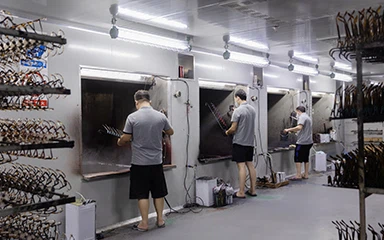
Our factory, with over 200 experienced workers, covers more than 6000m2 and has a monthly output of 150,000pcs. With CE, FDA, BSCI, and Walmart audit certifications, we primarily focus on the European and American markets.







fAQ
Q: What should I clean my reading glasses with?
Q: How do I keep my glasses from getting dirty?
Q: Store them in a hardshell case when not in use.
Don't place your glasses on your head.
Never place your reading glasses face-down on a tabletop.
Q: Can I wash my reading glasses with soap and water?
Q: Is saliva good for cleaning reading glasses?
Q: Can I wipe my reading glasses with a cloth?
Q: How do I know what strength reading glasses to get?
Age 40-44 – Recommended power +0.75 to +1.00 dioptre. Age 45-49 – Recommended power +1.00 to +1.50 dioptre. Age 50-54 – Recommended power +1.50 to +2.00 dioptre. Age 55-59 – Recommended power +2.00 to +2.25 dioptre.
Q: Is it OK to buy over-the-counter reading glasses?
Q: Is it OK to wear reading glasses all the time?
Q: What is the difference between reading glasses and prescription glasses?
Q: What is the most common reading glasses strength?
Q: Is there a big difference between 1.5 and 2.0 reading glasses?
Q: Are cheap reading glasses helpful or harmful?
Q: Can you have 20 20 vision and still need reading glasses?
Q: What happens if you wear reading glasses that are too strong?
Q: Which is better progressive or reading glasses?
Q: Why are prescription reading glasses so expensive?
Q: Are reading glasses for nearsighted or farsighted?
Q: What is the lowest grade reading glasses?
Q: What is the difference between 1.25 and 1.50 reading glasses?
Q: What shape reading glasses should I get?
We're professional reading glasses manufacturers in China, specialized in providing high quality customized service. We warmly welcome you to wholesale bulk high-end reading glasses from our factory. Contact us for more details.
Plastic Sunglasses