


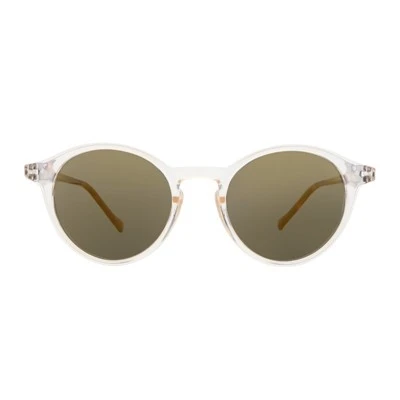
At present, the types of lens materials can be roughly divided into glass lens materials, resin lens materials, crystal lens materials, PC lens materials, MR lens materials, etc. Lenses of different materials have their own advantages and disadvantages and are used for different purposes.
1. Glass has the best wear resistance, but it is fragile, and glass lenses are heavy and uncomfortable to wear. Therefore, few people use it now, and generally choose other lenses as a substitute.
2. Resin lens: Resin lens is an optical lens made of resin. It is light and wear-resistant, and the light transmittance can reach 98% after adding a film. It has strong impact resistance and a wide range of luminosity. It can meet general eye needs. It is valued because of its special chemical structure and the fact that it can be used as latex paint and glue.
3. Crystal lens: The biggest advantage of crystal is its high hardness, and the lenses made of it are not easy to wear. Crystal lenses were popular in the 1920s and 1930s of this century. The lenses made of it are durable, but the price is very expensive.
4. PC lens: PC lens is also called "space lens" or "world lens". Its chemical name is polycarbonate, which is a thermoplastic material. PC lens has the advantages of light weight, high impact strength, high hardness, high refractive index, excellent mechanical function, good thermoplasticity, excellent electrical insulation function, and no pollution to the environment. It is also a special driver lens, but it is easy to corrode.
5. MR lens: MR lens is a high refractive index lens material with the most balanced performance indicators, especially suitable for the production of eyeglass lenses. The lens is thin and light, with clear vision, high pressure resistance, and not easy to damage. The most important thing is that compared with ordinary lenses, it is not easy to turn yellow, it is clear and bright for a long time, and it has very good corrosion resistance.


